Diesel prices are rising again and this time the impact is hitting faster than most freight brokers can adjust. As of January 2026, fuel costs represented 20-40% of total costs for carriers, with the sudden and uncontrollable increases (27% increase on prices since February 28th, 2026) the whole industry is facing even tighter margins.
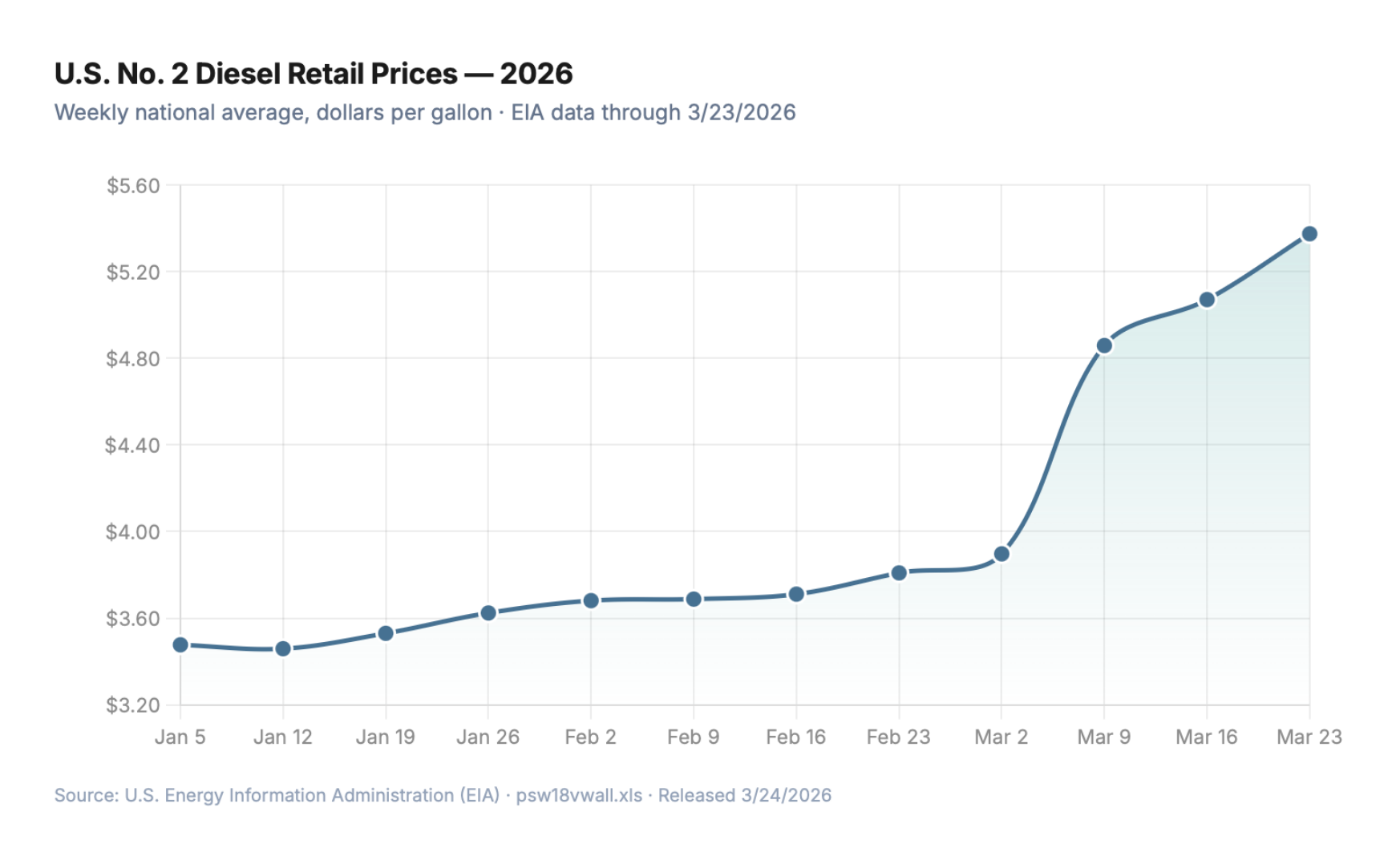
For freight brokers, this isn’t a headline, it's a daily cost increase. Every load moved today costs significantly more than it did just a few months ago.
Carriers adjust rates, shippers push back, and brokers are left absorbing the impact.
This is where the real pressure starts to build.
Sure, costs adjust overnight but cash flow does not. Diesel prices go up, carrier rates follow, and your cost per load immediately increases. There’s no delay there, you feel it on the very next shipment.
But on the other side of the business… nothing moves faster.
You still wait 30, 45, sometimes even 60 days to get paid. The timeline between delivering a load and actually seeing the cash hasn’t changed, even though everything around it has.
This creates an evident gap.
You’re paying more to move freight today but you’re still collecting based on yesterday’s timeline. And that gap continues to widen along with the pressure on your cashflow.
That imbalance is where margins start to erode not just from rising expenses but from how long your cash is tied up in the process.
Is This Temporary?
With global supply under pressure, this doesn’t look like a short term spike, it's an ongoing constraint to you and your business.
Geopolitical tensions, production cuts, and supply chain disruptions are all tightening the availability of crude and refined fuels. That ripple effect doesn’t stay in the energy markets, it moves directly into transportation costs.
Diesel being one of the largest operating expenses in logistics, means as it becomes more volatile and expensive, the whole freight industry will be forced to follow close behind it.
This is exactly what makes the situation different.
This isn’t a one-time increase that the market quickly re-corrects for. It’s a sustained shift in operating conditions. Costs are staying elevated, and in some cases, continuing to climb.
For freight brokers, this means you’re not just navigating a spike, you're operating in a new baseline where moving freight is consistently more expensive than it used to be.
And when higher costs become the norm, efficiency stops being optional and becomes the only way to protect margins.
Where Most Brokers Look vs Where They Should
When costs rise, most brokers look in the same place they try to cut expenses.
They negotiate harder, push back on rates, delay hiring, and tighten operations. And while that can help at the margins, it keeps the focus entirely on cost.
When cost is only half the equation.
While diesel prices and carrier rates are out of your control, how fast you get paid is not. And in an environment where costs are staying elevated, faster cash flow becomes just as important as cost control… if not more.
That’s where the real opportunity is.
Not in asking how to spend less, but in asking how to get paid faster.
Because in many cases, the cash tied up in delayed invoices, disputes, and manual processes outweighs the impact of rising fuel costs.
And that’s the shift most brokerages haven’t made yet.
The Leverage Point: DSO (days sales outstanding)
“But how….”
If cost is the problem everyone is focused on, DSO is the lever most are ignoring.
Days Sales Outstanding is what determines how quickly completed loads turn into cash. And in freight, that timeline often stretches 30, 45, even 60 days. In a rising cost environment, that delay becomes more than an inconvenience it becomes a constraint.
This is where solutions like Upwell come into play.
Instead of focusing on cutting costs or adding more people to chase payments, Upwell targets the speed and efficiency of how invoices move through your system. It connects directly to your existing workflows, aligns with your TMS, and removes the friction that slows down invoicing. Working together these features create a more consistent and predictable cash cycle.
The result is simple: Invoices go out faster, they go out cleaner, and they get approved without unnecessary back and forth.
That directly impacts DSO.
Because when the process is consistent and built around how freight actually operates, you are not waiting weeks to correct errors or track down missing information. You are getting paid based on when the work was completed not when the issues were resolved.
And that shift matters.
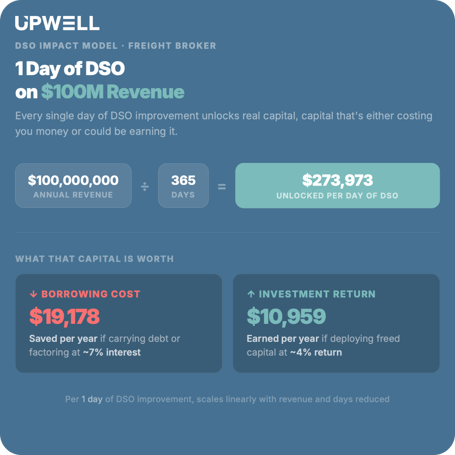
A one day reduction in DSO across a brokerage moving hundreds of loads is not a small improvement. It is immediate access to cash that would have otherwise been delayed.
In a market where costs are rising and margins are tightening, tools like Upwell are not just operational upgrades they become financial leverage.
Not by changing what you spend, but by changing how fast you get paid.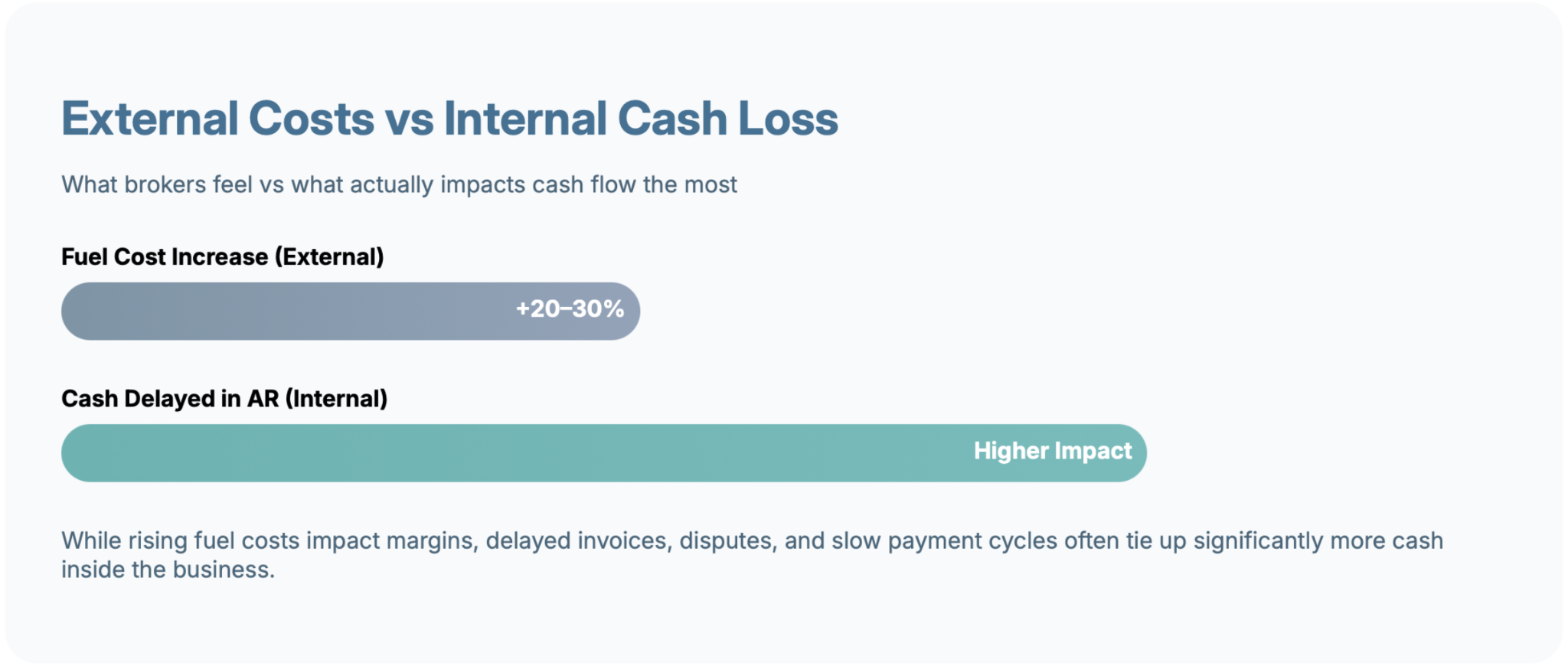
The Biggest Opportunity is Internal (Only Top Freight Companies Notice)
External pressure is real and it’s growing.
Fuel costs are rising, margins are tightening, and market conditions are shifting in ways that are difficult to control. Every broker is feeling it, more than ever before.
But the bigger opportunity isn’t in trying to outmaneuver those forces. It’s in tightening what happens inside your own operation.
How quickly you invoice, how consistently your process runs, and how efficiently cash moves through your business all have a direct impact on how well you navigate these conditions.
Upwell is taking the approach of improving internal operations rather than .
Freight brokers who are feeling the external pressures shouldn’t try to change them but instead adjust their focus to improving the efficiency of their internal mechanisms. Upwell facilitates and accelerates this shift in focus.
Not by changing the market, but by helping you operate more efficiently within it. When your process is aligned, consistent, and built around how freight actually works, cash moves faster and the business becomes more resilient.
And in an environment where costs are unpredictable, that kind of control is what separates brokers who manage through it from those who fall behind.
The result is not just faster payments, but more control, visibility, and efficiency for you and your team.